The ₹2 lakh chatbot that did nothing
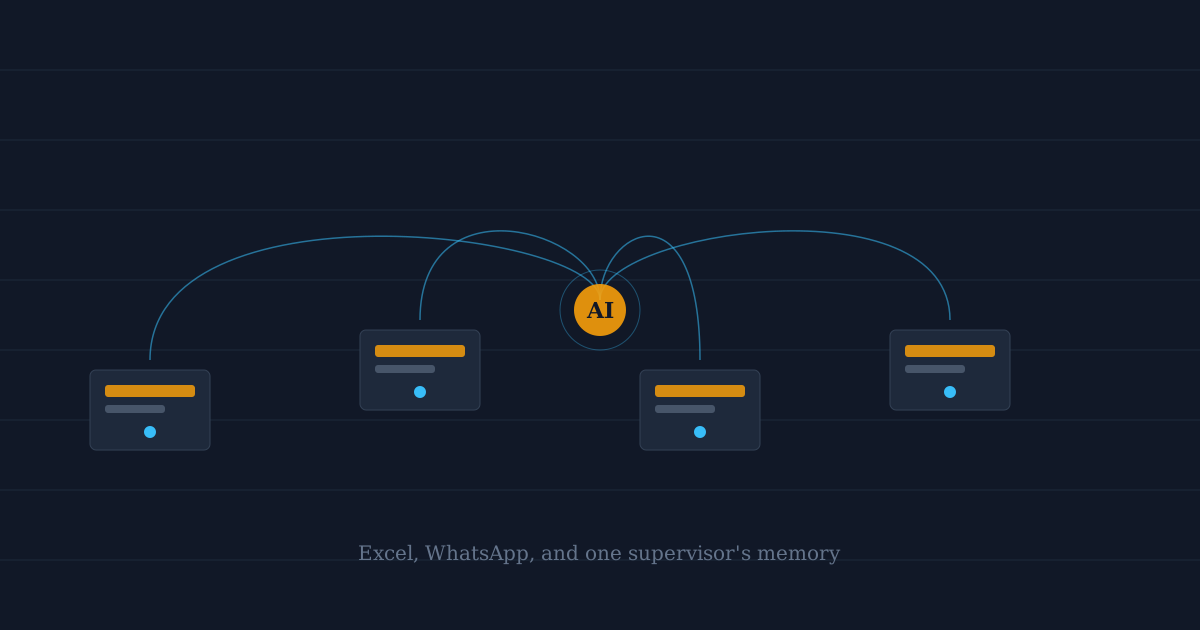
A services firm we know bought an "AI assistant" to handle lead follow-up. Six months later, leads were still going cold. The post-mortem was embarrassing: the assistant had no way to see the leads. They lived in a founder's WhatsApp, a shared Gmail, and a spreadsheet only one admin updated "when she had time." The AI wasn't broken. It was starving.
This is the most common AI failure in mid-size businesses, and it's never an AI failure. It's an integration failure — the model was bolted onto systems that don't talk to each other, so it reasoned brilliantly over incomplete, stale data.
The framework: five questions before you buy anything
1. Where does the information actually live?
Not where the org chart says it lives — where it really lives. Draw it: every order source, every inbox, every spreadsheet, every "ask Rakesh, he knows." If the answer is more than three places, you have an integration problem. AI will not fix fragmentation; it will industrialize it.
2. Does any step need judgment, or just reliability?
Sending the acknowledgment email, updating the tracker, reminding the vendor — these need reliability, not intelligence. A ₹0 cron script does them perfectly forever. Judgment — "this angry customer deserves a call, not a template" — is where AI earns money. Buy reliability with plumbing. Buy intelligence only for judgment.
3. Is the data good enough to reason over?
AI is a amplifier. Garbage in, confident garbage out. If your order statuses are three weeks stale, no model will save you — and worse, it will hallucinate certainty over your stale data.
4. Would two systems talking fix 80% of the pain?
In our audits, the answer is usually yes. Tally talks to the order sheet; the order sheet talks to WhatsApp notifications; suddenly the 11pm surprise calls stop. No model involved. Cost: a fraction of any AI project.
5. If you still need AI after integration — is the data now AI-ready?
This is the compounding insight: every integration you build makes your future AI cheaper, faster and safer, because it now reads one clean pipeline instead of five jungles. Integration is not a delay of the AI project. It is the first milestone of it.
What integration-first looks like in practice
- Service business: contact form → CRM → acknowledgment email → follow-up reminders. One pipeline, zero re-typing, nothing falls through. This is a two-week build, not an AI project.
- Factory: WhatsApp orders → single order sheet → daily dispatch brief → exception alerts. The supervisor's memory becomes a system. Still no AI — and the owner's phone stops ringing at 11pm.
- Then, and only then: layer reasoning where judgment pays — triaging which escalated exception matters, drafting the vendor-chase email, flagging the order that will slip before it slips.
Tools are temporary. Systems are permanent. Integration is how you build systems; AI is how you give them judgment.
The uncomfortable conclusion
If a vendor's first proposal is an AI platform and they haven't asked where your data lives, walk out. They're selling you a brain for a body with no nervous system. Fix the plumbing, and half your "AI ambitions" will quietly dissolve — because the problem was never intelligence. It was connection.
Not sure which problem you have?
Our Strategy Review is 45 minutes of diagnosis: what's broken, what it's costing you, and whether you need integration, AI, or neither. You leave with a written plan either way.
Book a Strategy Review →